Natural Latex Insoles Production Steps

26 Views

This article details the production steps of natural latex insoles, starting with latex collection and impurity removal, followed by pouring and curing to form an elastic foam structure, then cutting into insole shapes and undergoing stabilization treatment to delay degradation. Finally, a fabric layer may be added to enhance comfort, and elasticity and softness tests are conducted to ensure quality. Understanding these processes helps in selecting highly comfortable natural latex insoles.

Natural Latex Insoles Production Steps
Natural latex insoles are crafted from renewable materials with a focus on softness.
1.Latex Collection & Processing:
    Liquid natural latex is collected and processed to remove impurities.
2.Casting & Curing:
    The latex is poured into molds and cured with heat to form a soft, elastic foam structure.
3.Cutting & Trimming:
    The cured foam blocks are sliced into sheets and cut into insole shapes.
4.Stabilization Treatment:
    The latex is treated to slow down degradation. However, it still has a shorter lifespan than synthetic materials.
5.Finishing:
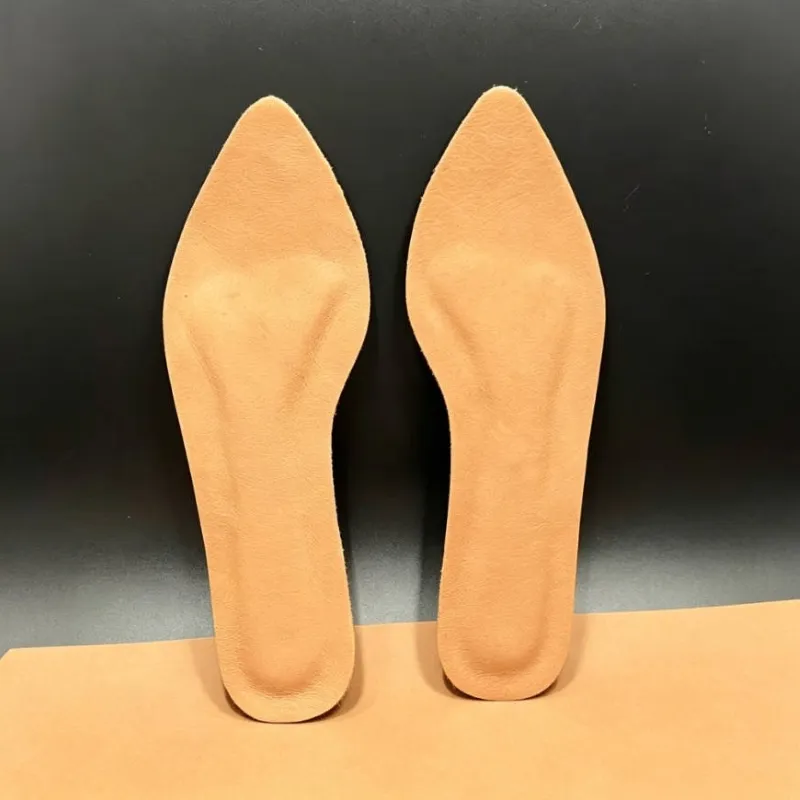
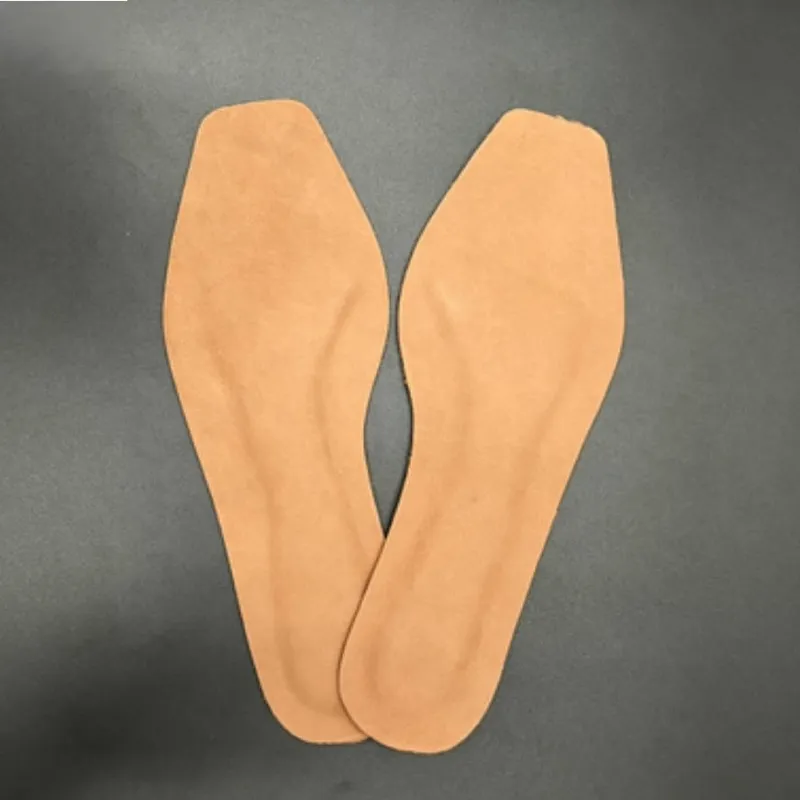
    A thin fabric layer may be added to improve skin contact comfort.
6.Quality Check:
   Insoles are tested for elasticity and softness before packaging.
Share

Loading share buttons…

Recommended Products

Cowhide Insoles, Shock Absorbing & Breathable
View Details
Hi-Poly Insoles

Cowhide Insoles, Shock Absorbing & Breathable

Product Name: Cowhide Insoles for Loafers <div> Colors: Black, Beige, Brown </div><div> Material: Split cowhide top layer + thick polyurethane (PORON-like) foam core</div>

Sweat-absorbentanti-odor, shock cushioningU-shaped heel support
Genuine Cowhide Self-Adhesive Latex Cushion Insoles
View Details
Leather Insoles

Genuine Cowhide Self-Adhesive Latex Cushion Insoles

Women's Genuine Leather Insoles with Latex Cushion <div>Colors: Black, White, Brown </div><div>Material: Water-dyed genuine leather + high-elastic latex core</div>

Cowhide materialself-adhesivesweat-absorbent
Women's Genuine Leather Latex Insoles, Self-Adhesive, Breathable
View Details
Leather Insoles

Women's Genuine Leather Latex Insoles, Self-Adhesive, Breathable

Product Name: Women's Genuine Leather Insoles with Latex Cushion <div> Colors: Black, White, Brown </div><div> Material: Water-dyed genuine leather + high-elastic latex core</div>

Self-adhesivesweat-absorbentanti-odor, non-slip
Back to News

Related

Global Insole Market Hits $50 Billion With Steady Annual Growth

The global insole market is expected to reach $50 billion by 2026, with an annual growth rate of 5.6%, driven by increasing public awareness of foot health and the rising consumption of sports shoes. Functional insoles are replacing traditional insoles as the mainstream, with medical orthopedic, anti-fatigue, and sports shock-absorbing insoles experiencing rapid growth in overseas wholesale markets. Asia-Pacific is the core production region, and customized and high-performance insoles will capture a larger market share in the next decade.

2026-06-08

Memory Foam Insoles Dominate Premium Footwear Wholesale Market

In 2026, memory foam insoles dominate the global high-end footwear wholesale market. Their slow-rebound and adaptive fit properties perfectly match the foot shape, evenly distribute plantar pressure, and alleviate fatigue from prolonged walking. Compared to ordinary EVA foam, high-density memory foam maintains lasting softness and support without deformation, making it the standard upgrade for high-end athletic shoes, travel shoes, and casual footwear. As a professional insole supplier, we offer bulk memory foam insoles with customizable density and thickness.

2026-06-08

3D Printed Custom Insoles Lower OEM Production Costs in 2026

In 2026, 3D printing technology is reshaping the custom insole manufacturing industry, optimizing traditional OEM production processes. Through digital foot scanning and 3D molding technology, manufacturers can produce custom insoles based on precise foot contour data, eliminating material waste and improving fit. Compared to handcrafted custom insoles, 3D-printed insoles offer consistent quality, faster delivery, and lower batch costs, and are widely used in the sports insole, medical orthotic insole, and casual insole markets, helping European and American brands reduce production costs.

2026-06-08